The main Golden Circle roads are paved and maintained year-round, so Þingvellir, Geysir and Gullfoss remain accessible in every season, weather permitting. Winter snow, ice and strong winds can still cause temporary restrictions, so check road conditions before setting out. What changes most by month is daylight and darkness: Reykjavik gets as little as 4 hours around the December solstice and up to 21 hours around the June solstice — long, bright summer evenings rather than a true midnight sun this far south of the Arctic Circle, and genuinely dark nights for the northern lights from autumn through early spring.
Þingvellir, Geysir and Gullfoss are open in every season on maintained, paved roads, with occasional storm restrictions in winter. The real seasonal variable is daylight — roughly 4 hours around the December solstice against close to 21 in June, bright evenings rather than a true midnight sun this far south of the Arctic Circle. A short winter day limits how much you can fit in; a long summer one leaves little darkness for the northern lights.
May and September are the strongest all-round choices for a first visit, each for different reasons. May has very long daylight and lower demand than midsummer; April, just before it, is quieter and cooler still. September is cooler and shorter on daylight, but the extra darkness brings a real chance of the northern lights.
Choose June for the longest days and easiest sightseeing, or July for the warmest weather, accepting peak-season demand. From September through March, nights are dark enough for aurora watching, though it still depends on clear skies and solar activity.
Winter is much quieter and can be spectacular under snow, but daylight becomes the main limitation. Around the December solstice you get only about 4 hours of useful light, so keep the itinerary simple and check road conditions before travelling. Whatever the month, start early for quieter stops at Þingvellir, Geysir and Gullfoss before the main Reykjavík tour buses arrive.
| Best overall (first visit) | May or September (18h/13h daylight) |
| Longest days, easiest touring | June (~21h daylight) |
| Warmest weather | July (15°C, peak season) |
| Northern lights | September – March |
| Quietest period | Nov – Feb, excl. holidays |
| Snowy winter scenery | December – March |
| Most useful exact-date checks | Road status, wind, precipitation, daylight, cloud |
Iceland's Two Seasons (and the Shoulders Between Them)
Summer (June–August) is defined by long daylight and full access. Light stretches past 19 hours, peaking around the June solstice at roughly 21 hours in Reykjavik — bright, but not a true midnight sun (see below). Temperatures are Iceland's mildest, with mean daily highs of 13–15°C, every road including the interior F-roads opens (generally mid-June through August or early September), and wildlife — puffins, whales — is at its most active. The trade-off is cost and crowds: this is peak season, with the highest prices and, on Iceland's own visitor figures, more than double December's arrivals in July and August.
Winter (November–March) flips that entirely. Daylight shrinks to as little as 4–5 hours around the December solstice, mean daily highs sit a few degrees either side of freezing, and roads demand more caution — check safetravel.is or road.is before a winter self-drive. In exchange, you get the lowest prices of the year, the thinnest crowds, and the only realistic window for natural ice caves and the northern lights.
Spring (April–May) and autumn (September–October) sit in between: more daylight than winter, far fewer people than summer, and a real cost saving over peak season. May and September are widely considered the sweet spot for balancing weather, crowds and price — though May, specifically, runs quieter than September on Iceland's own arrivals data.
Other Experiences You Might Enjoy
Whatever season you choose, Iceland rewards adding a second experience to your Golden Circle day. In summer, that might be whale watching, a South Coast waterfall run, or Silfra snorkelling; in winter, a guided Northern Lights hunt, an ice cave tour, glacier snowmobiling, or a warm soak at the Blue Lagoon or Sky Lagoon near Reykjavik. Browse top-rated experiences for every season:
Check Your Exact Travel Dates
Pick a date and this computes the exact daylight for that day, the typical weather for that time of year, whether the sky is likely to be dark enough for the northern lights, and how busy Iceland tends to be that month.
Choose a date above to see the numbers for it.
Month by Month
Tap any month to see what to expect — daylight, temperature, crowds and northern-lights odds at a glance. Treat these as general guides rather than guarantees: Icelandic weather is famously changeable, with locals joking you can get all four seasons in a single day, in any month.
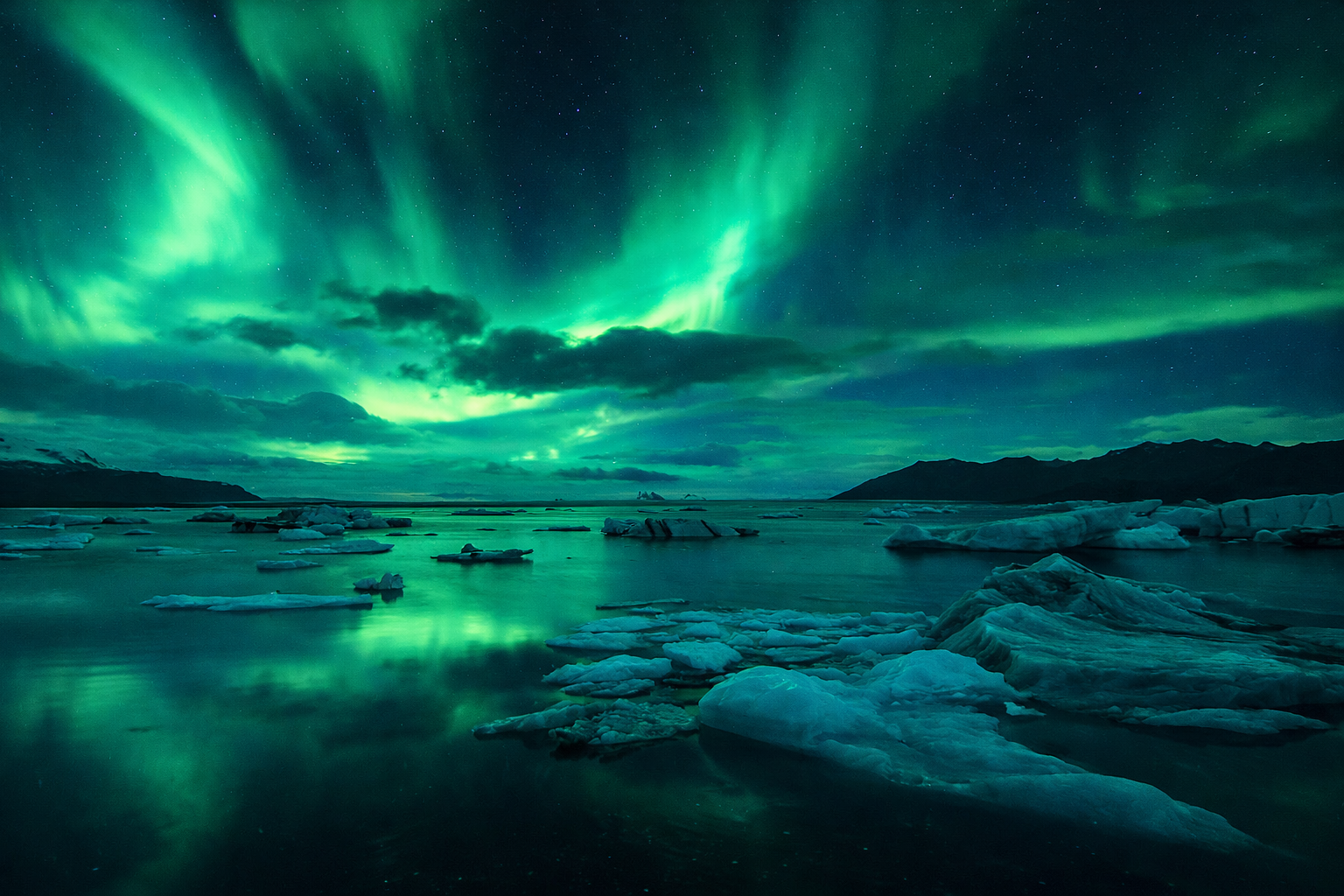
January
- Just under 5 hours of pale daylight, but long dark nights make aurora hunting excellent.
- Snowy Golden Circle plus natural ice caves in full season.
- Lowest prices of the year once the New Year crowds leave.
- SeasonDeep winter
- Daytime temp-2 to 3°C
- Daylight~5 hrs
- CrowdsLow · cheap (5.4%)
- Northern lightsExcellent
- RatingLow season
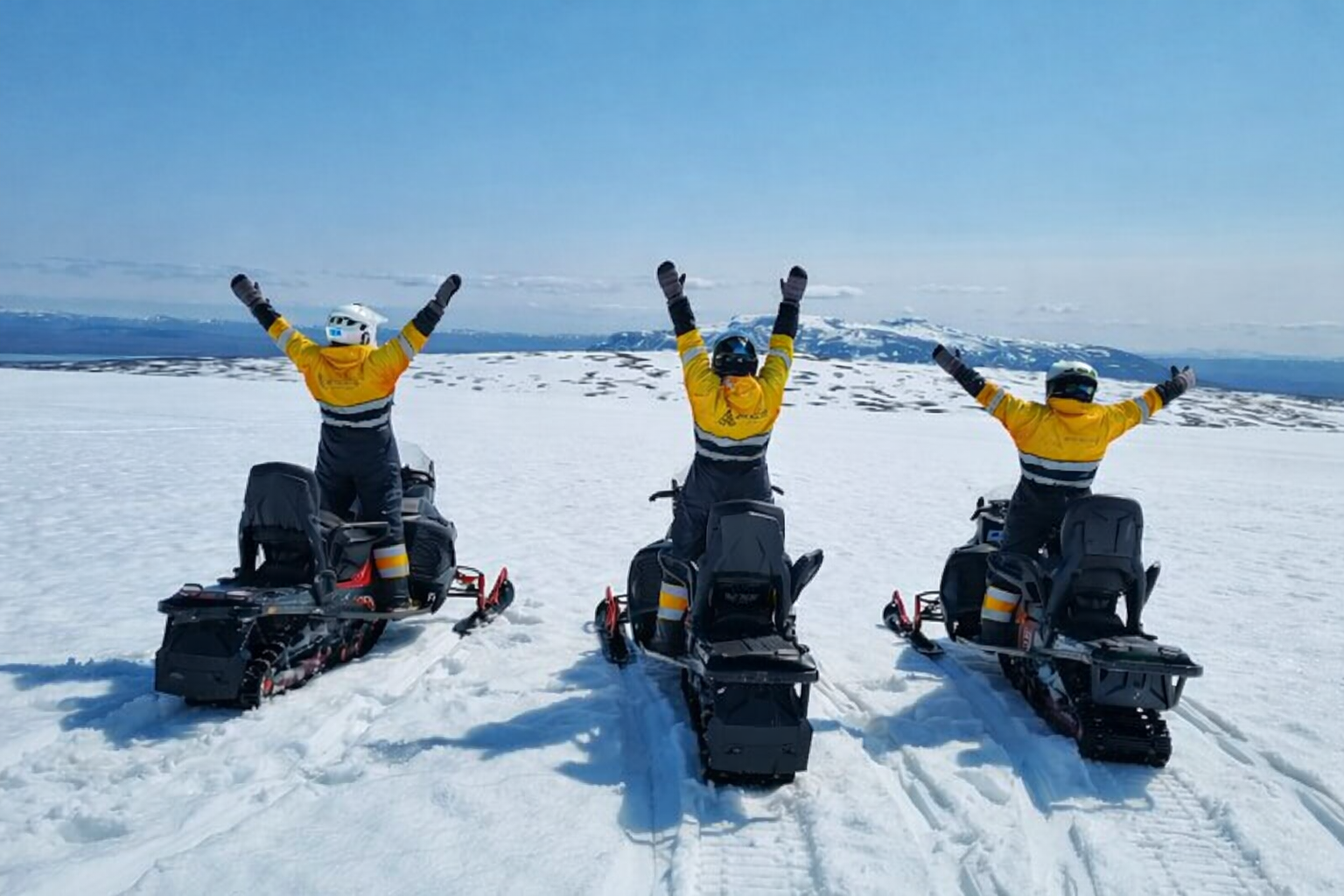
February
- Often Iceland's snowiest month, with 8–9 hours of daylight returning.
- Strong aurora odds plus Reykjavík's Winter Lights Festival.
- Ice caves still open; geothermal spas at their most atmospheric.
- SeasonDeep winter
- Daytime temp-2 to 3°C
- Daylight~8-9 hrs
- CrowdsLow · cheap (6.6%)
- Northern lightsExcellent
- RatingLow season
March
- Around 11–12 hours of daylight by mid-month — full days of sightseeing.
- The spring-equinox period is historically good for the northern lights.
- Glacier hiking and late ice caves, still at winter prices.
- SeasonLate winter
- Daytime temp-1 to 4°C
- Daylight~11-12 hrs
- CrowdsShoulder (6.7%)
- Northern lightsGood
- RatingGood — shoulder
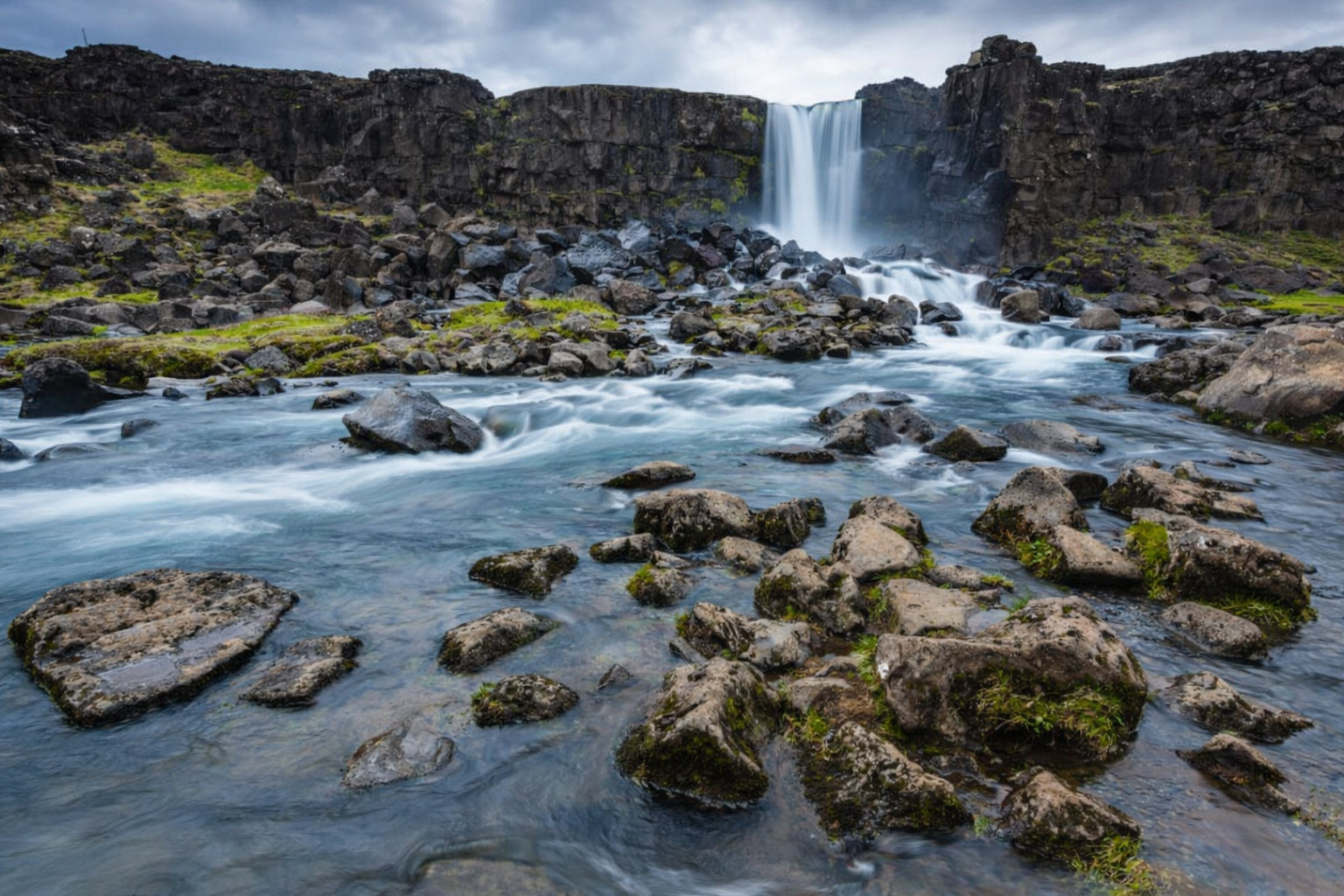
April
- Days stretch to about 15 hours as the thaw sets in.
- Quieter sightseeing before the summer crowds arrive.
- Returning birdlife; the aurora season is fading as nights shorten.
- SeasonSpring
- Daytime temp1 to 7°C
- Daylight~15 hrs
- CrowdsShoulder (6.6%)
- Northern lightsFading
- RatingGood — shoulder
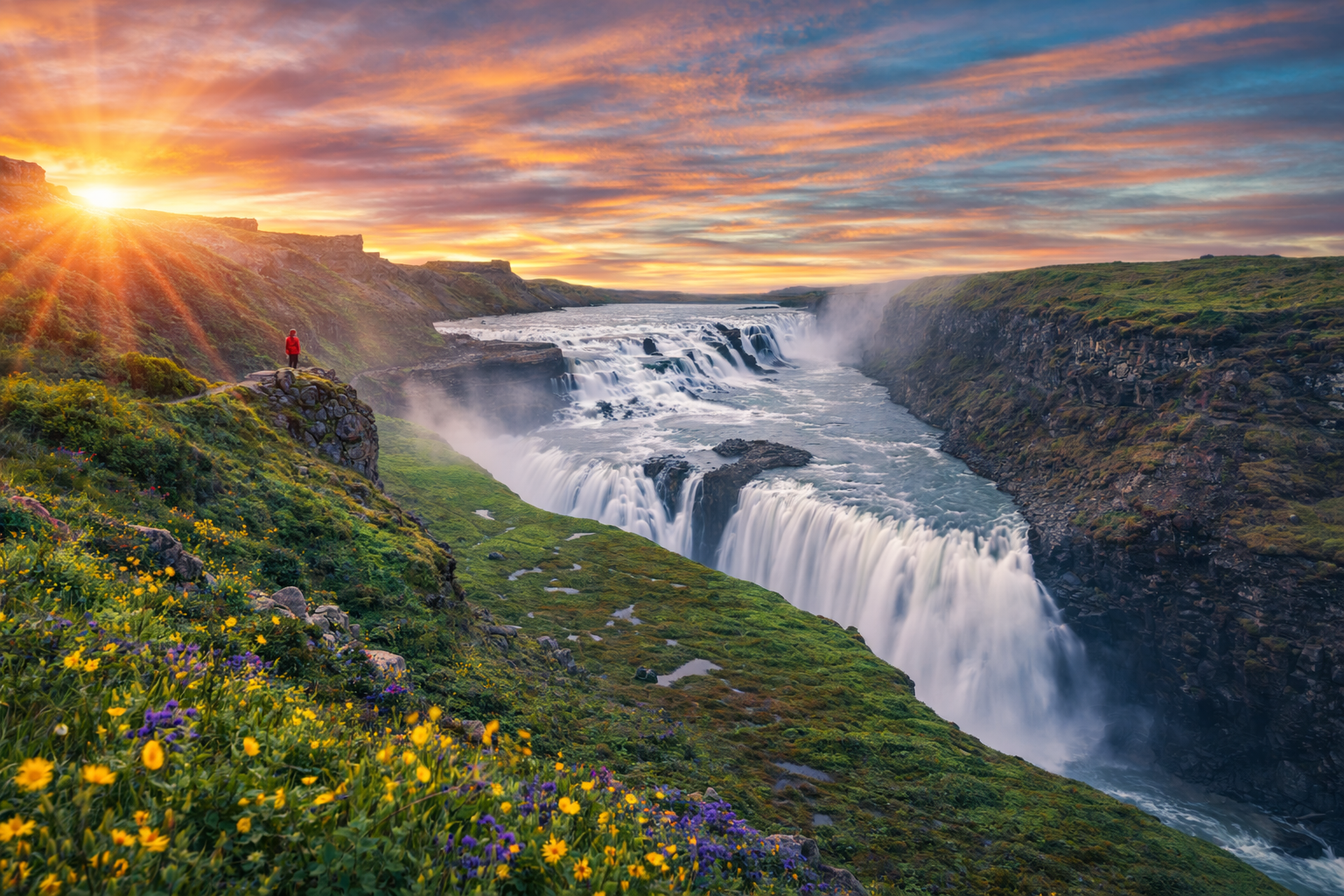
May
- Long ~18-hour days with milder, more settled weather.
- Puffins return, lupins bloom and the landscape turns green.
- Quieter than September on Iceland's own visitor figures, and shoulder pricing throughout.
- SeasonSpring
- Daytime temp4 to 10°C
- Daylight~18 hrs
- CrowdsShoulder (7.0%)
- Northern lightsToo light
- RatingBest — sweet spot
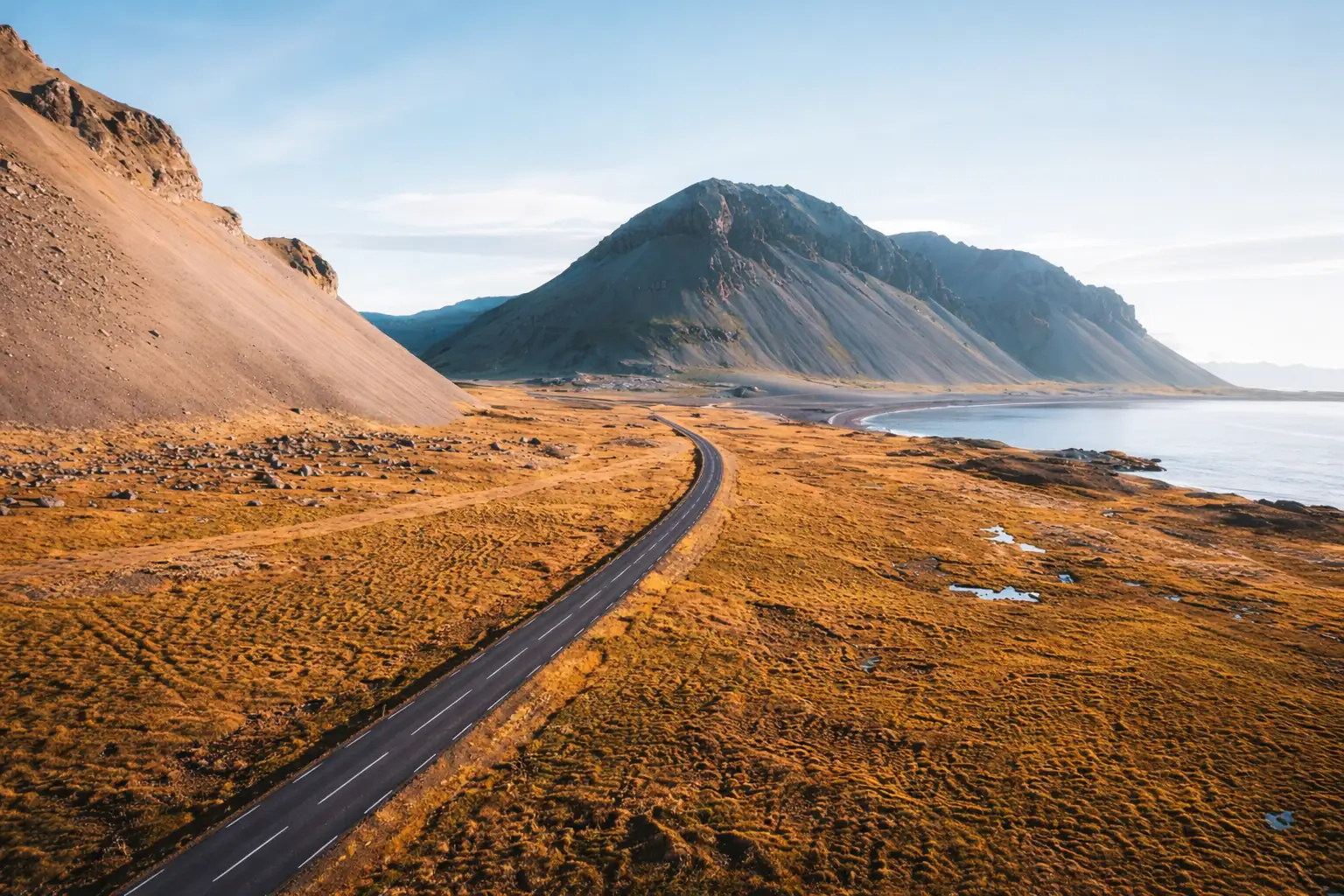
June
- Around the June 21 solstice the sun dips just below the horizon for about two hours — bright twilight all night, not a true midnight sun.
- Whale and puffin season is in full swing near Reykjavík.
- Peak season begins, so book tours and rental cars ahead.
- SeasonSummer
- Daytime temp7 to 13°C
- Daylight~21 hrs
- CrowdsPeak begins (10.3%)
- Northern lightsSky too bright
- RatingBest for daylight
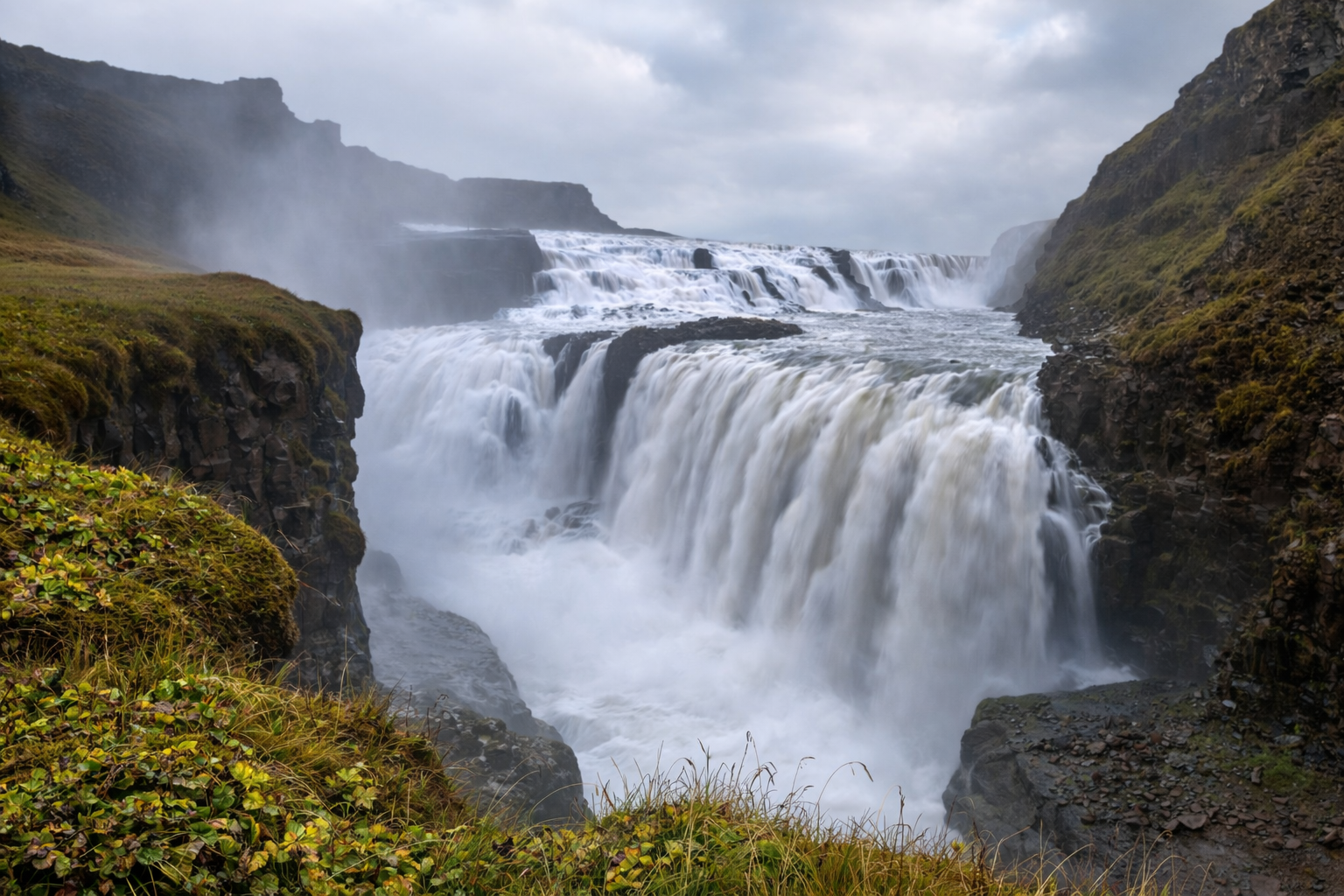
July
- Iceland's warmest month, with the easiest driving conditions of the year.
- Festivals, camping and around 20 hours of daylight.
- One of the two busiest months on Iceland's own visitor figures — start early to beat the tour buses.
- SeasonSummer
- Daytime temp9 to 15°C
- Daylight~20 hrs
- CrowdsHighest (13.3%)
- Northern lightsNone (too light)
- RatingWarmest (peak season)
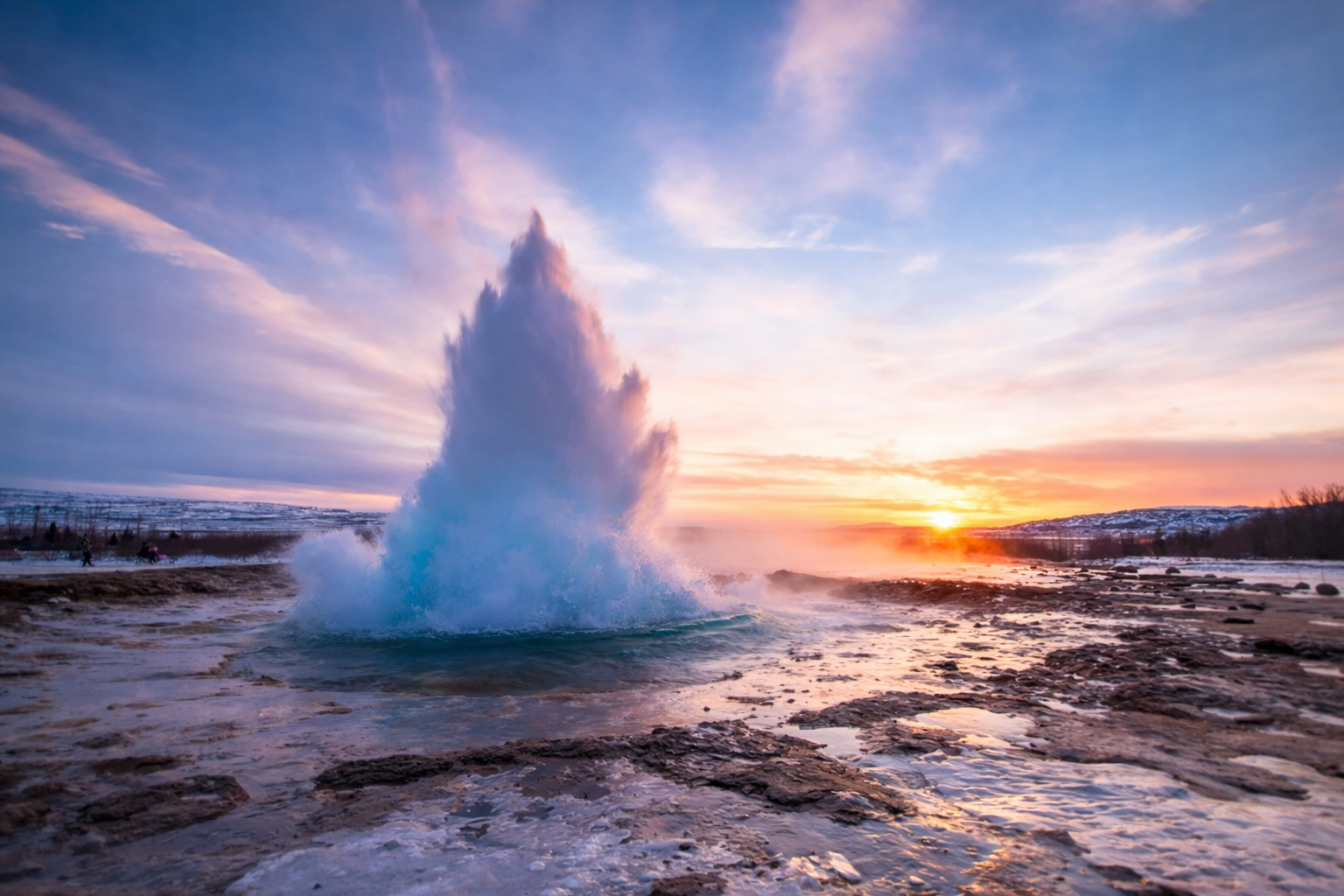
August
- Still warm, with nights finally darkening enough for the first faint aurora late in the month.
- The single busiest month of the year for visitor numbers, just ahead of July.
- Þjóðhátíð and other festivals cluster in the first half of the month; crowds ease toward the end.
- SeasonSummer
- Daytime temp9 to 14°C
- Daylight~16-17 hrs
- CrowdsHighest (13.8%)
- Northern lightsFirst faint, late
- RatingWarm, busiest
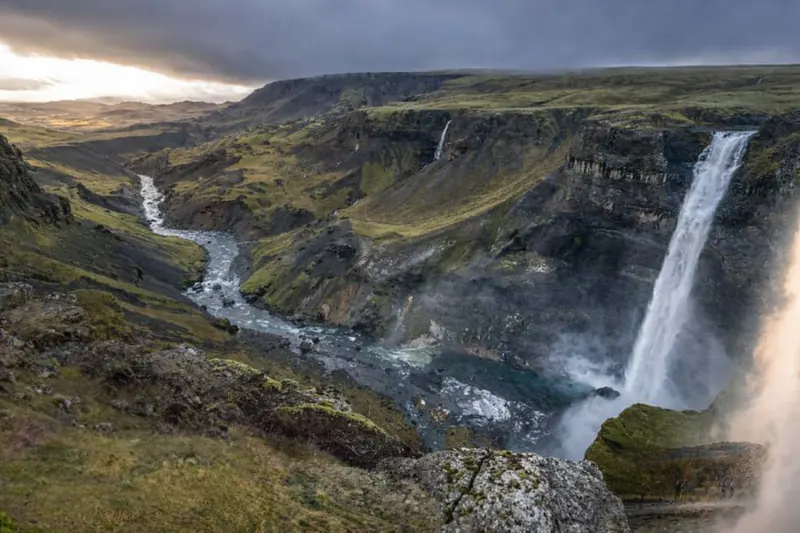
September
- Around 13 hours of daylight plus genuinely dark skies returning for the aurora.
- Autumn colours sweep across the mossy lava fields.
- Crowds and prices drop from the summer peak, though September is still busier than May.
- SeasonAutumn
- Daytime temp6 to 11°C
- Daylight~13 hrs
- CrowdsModerate (9.9%)
- Northern lightsSeason returns
- RatingBest — all-round
October
- Strong aurora season with still-manageable temperatures.
- Around 10 hours of daylight; dramatic, moody light for photography.
- Fewer crowds and lower prices as the F-roads close.
- SeasonAutumn
- Daytime temp3 to 8°C
- Daylight~10 hrs
- CrowdsLower (8.9%)
- Northern lightsStrong
- RatingGood — shoulder
November
- Short 6–7 hour days as winter sets in — excellent aurora odds.
- Ice caves typically begin opening this month.
- Low prices and the Iceland Airwaves music festival.
- SeasonEarly winter
- Daytime temp0 to 5°C
- Daylight~6-7 hrs
- CrowdsLow · cheap (6.3%)
- Northern lightsExcellent
- RatingLow season
December
- The darkest month, with just over 4 hours of daylight.
- Peak aurora conditions plus Christmas markets and NYE fireworks.
- The cheapest month of the year outside the Christmas/New Year week itself, which spikes back to summer-level pricing.
- SeasonDeep winter
- Daytime temp-2 to 3°C
- Daylight~4 hrs
- CrowdsLowest (5.3%; holidays up)
- Northern lightsPeak
- RatingLow season
Matching the Month to What You Want to Do
Road-tripping the Ring Road or Golden Circle: June through August offers the easiest driving, with every road open and long daylight. May and September are a good compromise — fewer crowds, still very manageable — though shoulder-season weather can shift quickly, so build in flexibility.
Long, bright evenings: Late May through July, peaking at the June solstice, when the sun dips only briefly below the horizon and the sky stays bright most of the night.
Whale watching: April through October, with June through August the peak.
Puffins: Return in May and stay through roughly mid-August.
Hiking and the Highlands: The interior F-roads (4x4 only) typically open in stages from June and close again by late September or October, depending on snowmelt.
Natural ice caves: A winter-only experience, generally accessible from around November through March.
Northern lights: September through March — the dynamics (darkness, solar activity, weather) deserve their own treatment; see our Best Time to See the Northern Lights guide for the month-by-month breakdown, or pair this with a guided aurora chase for the best odds.
Cheapest trip: Deep winter — November, January and February in particular — with the notable exception of the Christmas/New Year week, which spikes to summer-level pricing.
Visiting in Winter? Combine the Golden Circle with the Northern Lights
From roughly September to March, dark Icelandic nights make the northern lights a realistic add-on to a Golden Circle day. This well-rated tour pairs the classic loop with a soak in the Secret Lagoon — for the aurora chase itself, see the tour options on our Northern Lights guide:
Golden Circle, Kerið & Secret Lagoon Tour
The three classic stops, Kerið crater, and a warm Secret Lagoon soak on the way back to Reykjavik — a full day in one booking, running year-round.
- Geysir, Gullfoss and Þingvellir National Park
- Kerið volcanic crater lake
- Bathe in the geothermal Secret Lagoon
The Golden Circle: A Year-Round Exception
While many of Iceland's most dramatic sights are seasonal, the Golden Circle isn't one of them. Þingvellir National Park, the Geysir geothermal area, and Gullfoss waterfall sit on paved, well-maintained roads and stay open in every season. What changes is the character of the visit: long summer days let you linger and avoid the midday tour-bus rush by going early or late, while winter transforms the route into a snow-and-ice spectacle, with Gullfoss framed by frozen cliffs and far fewer visitors sharing the view. A 4x4 adds peace of mind in winter, but the route itself is accessible whenever you choose to go — just check safetravel.is before a winter self-drive, since storms can bring temporary road restrictions.
Here's the route's conditions across the four seasons:
| Season | Crowds | Weather | Daylight | Driving |
|---|---|---|---|---|
| Winter (Nov–Feb) | Low | Cold, snow | 4–9 hrs | Challenging — check safetravel.is; consider a guided tour or 4x4 |
| Spring (Mar–May) | Medium | Variable | 12–18 hrs | Improving |
| Summer (Jun–Aug) | High | Mild | 16–21 hrs | Easy — 2WD is fine |
| Autumn (Sep–Oct) | Medium | Cool, wetter | 10–13 hrs | Good |
For the complete breakdown of the route, see our Complete Golden Circle Guide, and for the individual stops, our guides to Þingvellir, Geysir and Gullfoss. Whatever the month, a straightforward classic full-day tour from Reykjavik is the easiest way to see all three:
Reykjavik: Golden Circle Full-Day Tour with Kerið Crater
The most-booked way to see Þingvellir, Geysir and Gullfoss — plus Kerið crater — by air-conditioned bus from Reykjavik with hotel pickup, in any season.
- Þingvellir, where the tectonic plates meet
- Strokkur geyser and the Gullfoss waterfall
- The Kerið volcanic crater lake
Reykjavik: The Golden Circle Full-Day Tour
A no-frills, well-reviewed coach tour of the three headline stops with hotel pickup — runs all year, so it's a safe bet whatever month you travel.
- Strokkur, Iceland's most active geyser
- The Gullfoss waterfall
- Þingvellir National Park
Practical Notes: Packing and Booking
Wind is the most underestimated factor in any season. Iceland is extraordinarily windy — mean wind speeds run from about 3.5 m/s in July to 5.5 m/s in February at Reykjavik — and wind chill dramatically lowers the effective temperature: a 5°C day with 50 km/h gusts feels well below freezing.
Packing follows one rule in every season: layers, plus a genuinely waterproof and windproof outer shell — an umbrella is close to useless in Icelandic wind. In summer, add light layers and sunglasses; in the shoulder seasons, a warm hat and gloves; in winter, insulated boots, thermal base layers, and traction cleats for icy paths. For a full seasonal checklist, see our what to wear packing list.
Booking lead time matters most in summer: accommodation, rental cars (especially automatics and 4x4s), and popular tours can sell out weeks or months ahead during the June–August peak. In the off-season, you'll generally find far more last-minute availability, though booking ahead still secures better pricing.
Festivals worth timing around include Þjóðhátíð in the Westman Islands (early August), Reykjavik's Culture Night (late August), the Reykjavik International Film Festival and the traditional sheep round-ups, or Réttir (both September), and Iceland Airwaves (early November).
How We Know
Temperature, precipitation, sunshine hours and wind are 1991–2020 monthly normals for the Reykjavík station, published by the Icelandic Meteorological Office (Veðurstofa Íslands), averaged from the office's own published monthly data file. They are 30-year averages, not a forecast for any single trip, and a single day can and does fall well outside them — Icelandic weather is famously changeable within a month, not just between months.
Daylight hours are computed with the NOAA solar-position algorithm for Reykjavik's coordinates (64.15°N, 21.94°W), mid-month, for 2026 — the same method used by the live date checker above. They agree with published sunrise/sunset tables to within about seven minutes and are not an observed measurement.
Visitor-volume figures are foreign passenger departures through Keflavík Airport for 2025 (the last complete year), published by Ferðamálastofa, the Icelandic Tourist Board. This is a national, all-of-Iceland series, not a Golden-Circle-specific visitor count — it cannot tell you how many people are standing at Gullfoss on a given afternoon, and we use it only as a proxy for how busy the country, and by extension its most-visited day trip, tends to be in a given month. As a second, independent check on the same pattern, Statistics Iceland (Hagstofa Íslands) reported South Iceland hotel occupancy at 92.8% in July 2026 — a regional accommodation figure, not a Golden-Circle-specific one either, but it points the same direction as the national arrivals data.
Tour prices, ratings and review counts were checked against GetYourGuide's live listings on 18 September 2026, except the Kerið & Secret Lagoon tour's rating and review count, which come from our own project data and were not re-fetched live on that date.
What these numbers cannot tell you: whether the northern lights will actually appear on your specific night (that also needs solar activity and a clear sky, checked separately closer to your trip), or the exact crowd level at any one stop on any one day. Use the live date checker above for the numbers that change with the calendar; check safetravel.is and a short-range aurora forecast closer to your travel date for the two that don't.
Frequently Asked Questions
November, January and February see Iceland's fewest visitors of the year — Iceland's own arrivals data puts them at roughly half of August's volume — with the exception of the Christmas and New Year week, when numbers jump back toward summer levels. Accommodation and tours are generally easiest to book, and at their best rates, during the quieter months.
Any time — Þingvellir, Geysir and Gullfoss sit on paved roads and stay open year-round. May and September give the best overall balance of daylight, mild weather and thinner crowds; June has the longest daylight for an evening loop; winter (September–March) adds the chance to pair the route with the northern lights.
Yes. The dark skies at Þingvellir and along the rest of the route, away from Reykjavik's light pollution, make it a genuine aurora-viewing spot. The sky only gets dark enough from roughly September through March — see our dedicated Northern Lights guide for the month-by-month breakdown.
Not quite at Reykjavik's latitude, which sits about 269 km south of the Arctic Circle. Around the June solstice the sun dips just below the horizon for roughly two hours and the sky stays in bright twilight rather than going properly dark — light enough for sightseeing at almost any hour, without a true midnight sun.
April is a genuine early-shoulder month for the Golden Circle: about 15 hours of daylight, milder than winter, and noticeably quieter than summer. The trade-offs are that the weather is still changeable and the northern lights season is fading as the nights shorten.
Puffins return to Iceland's coastal cliffs in May and stay through roughly mid-August. Whale watching runs April through October, with June through August the most reliable months — both are easy add-ons to a Reykjavik trip, though neither is part of the Golden Circle route itself.
Not strictly — the three core stops are on paved, maintained roads. A 4x4 adds peace of mind on snow and ice, and self-drivers should check road.is or safetravel.is before setting out, since winter storms can bring temporary restrictions. Many winter visitors choose a guided tour instead of self-driving for exactly this reason.